Asia-Pacific Conference on Communications (APCC) 2025
November 26th - 28th, 2025 | I-site Namba, Osaka Metropolitan University, Osaka, Japan

Osaka - Japan
November 26th - 28th, 2025 | I-site Namba, Osaka Metropolitan University, Osaka, Japan
Special Sessions
SS1. Ambient Intelligence for Smart City
Aim and scope
The global population, particularly the urban population has been increasing, which causes a lot of issues for cities, such as congestion and increased demand for resources, including energy, water, sanitation, education, and healthcare services. A smart city has been expected a lot to solve those issues. The concept of a smart city is not new. Due to the progress of artificial intelligence (AI) and information and communication technology (ICT), including the Internet of Things (IoT) and big data (BD), the concept of a smart city has been being realized in various aspects. This special session aims to present recent advances in smart city, including various fundamental technologies helping to realize smart city and its applications.
Invited Speakers

Dr. Mariko Isogawa
Keio University, Japan
Biography:
Mariko Isogawa received the B.S., M.S., and Ph.D. degrees from Osaka University, Japan, in 2011, 2013, and 2019, respectively. From 2019 to 2020, she was a Visiting Scholar at Carnegie Mellon University, USA. She is currently an Associate Professor in the Department of Information and Computer Science, Faculty of Science and Technology, Keio University, Japan. Her research interests include computer vision and pattern recognition for perceiving people and environments, particularly under challenging sensing conditions.
Topic:
Beyond Visibility: Understanding Scenes and Humans under Challenging Conditions with Diverse Sensing
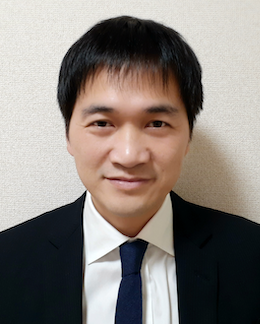
Dr. Kien Nguyen
Chiba University, Japan
Biography:
Kien Nguyen is an expert in communication networks and has over 20 years of experience in industry and academia. He received his B.E. in Electronics and Telecommunications from Hanoi University of Science and Technology, Vietnam, in 2004, and his Ph.D. in Informatics from the Graduate University for Advanced Studies, Japan, in 2012. From 2014 to 2018, he was a researcher at the National Institute of Information and Communication Technology (NICT), Japan, focusing on next-generation mobile wireless networks, IoT connectivity, and distributed systems. Since 2018, he has been with Chiba University, where he is currently an Associate Professor, leading research on IoT-Blockchain systems, AI- driven network optimizations, and future communication networks. Dr. Nguyen has published over 190 peer-reviewed journal and international conference papers, including in IEEE JSAC, IEEE IoTJ, IEEE TVT, IEEE TNSM, and ACM TOSN. His work has also resulted in three patents, several IETF Internet drafts, and collaborative projects in wireless communication and intelligent networking. He is a Senior Member of IEEE, a member of IEICE and IPSJ, and serves as a technical editor for the Computer Communications (COMCOM) journal.
Topic:
Toward Scalable IoT-Blockchain Systems for Smart Cities
Organizer
Organizer: Tomoaki Ohtsuki, Keio University, Japan
Tomoaki Otsuki (Ohtsuki) received the B.E., M.E., and Ph. D. degrees in Electrical Engineering from Keio University, Yokohama, Japan in 1990, 1992, and 1994, respectively. From 1994 to 1995, he was a post-doctoral fellow and a Visiting Researcher in Electrical Engineering at Keio University. From 1993 to 1995, he was a Special Researcher at the Fellowships of the Japan Society for the Promotion of Science for Japanese Junior Scientists. From 1995 to 2005, he was with the Science University of Tokyo. In 2005, he joined Keio University. He is now a Professor at Keio University. From 1998 to 1999, he was with the department of electrical engineering and computer sciences, University of California, Berkeley. He is engaged in research on wireless communications, optical communications, signal processing, and information theory. Dr. Ohtsuki is a recipient of the 1997 Inoue Research Award for Young Scientist, the 1997 Hiroshi Ando Memorial Young Engineering Award, Ericsson Young Scientist Award 2000, 2002 Funai Information and Science Award for Young Scientist, IEEE the 1st Asia-Pacific Young Researcher Award 2001, the 5th International Communication Foundation (ICF) Research Award, 2011 IEEE SPCE Outstanding Service Award, the 27th TELECOM System Technology Award, ETRI Journal’s 2012 Best Reviewer Award, 9th International Conference on Communications and Networking in China 2014 (CHINACOM ’14) Best Paper Award, 2020 Yagami Award, The 26th Asia-Pacific Conference on Communications (APCC2021) Best Paper Award, International Conference on Internet of Things, Communication and Intelligent Technology (IoTCIT) 2024 Best Paper Award, and the 2024 6th International Conference on Robotics, Intelligent Control and Artificial Intelligence (RICAI2024) Best Paper Award. He has published more than 294 journal papers and 533 international conference papers. He served as a Chair of IEEE Communications Society, Signal Processing for Communications and Electronics Technical Committee. He served as a technical editor of the IEEE Wireless Communications Magazine and an editor of Elsevier Physical Communications. He is now serving as an Area Editor of the IEEE Transactions on Vehicular Technology and an editor of the IEEE Communications Surveys and Tutorials. He is also serving as the IEEE Communications Society, Asia Pacific Board Director. He has served as general-co chair, symposium co-chair, and TPC co-chair of many conferences, including IEEE GLOBECOM 2008, SPC, IEEE ICC 2011, CTS, IEEE GLOBECOM 2012, SPC, IEEE ICC 2020, SPC, IEEE APWCS, IEEE SPAWC, and IEEE VTC. He gave tutorials and keynote speeches at many international conferences including IEEE VTC, IEEE PIMRC, IEEE WCNC, and so on. He was Vice President and President of the Communications Society of the IEICE, also he was a distinguished lecturer of the IEEE. He is a fellow of the IEICE, a Fellow of Asia-Pacific Artificial Intelligence Association (AAIA), a senior member of the IEEE, and a member of the Engineering Academy of Japan.
SS2. Alternative Radio Efficiency: Semantic communications and ML-based semantic video transfer
Aim and scope
The amount of information that needs to be transmitted is increasing, and there is a growing demand for more efficient utilization of radio resources. In order to convey information accurately while also increasing the volume of transmitted data, new technologies are expected to replace traditional information theory-based data compression techniques. Semantic communication, as the name suggests, aims to transmit only the essential content of the information, while omitting peripheral details, thereby contributing to more efficient use of radio waves. This approach to communication has been gaining significant attention in recent years. This session will feature both an invited lecture and general presentations. The invited lecture will provide a tutorial-like explanation of semantic communication, offering practical examples, while the general presentations will discuss cutting-edge research results in the field of semantic communication.
Invited Speakers
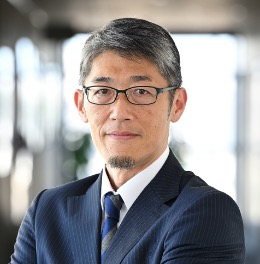
Prof. Tomoaki Otsuki
Professor, Department of Information and Computer Science,
Faculty of Science and Technology,
Keio University
Topic:
Semantic Communications Based on Generative AI
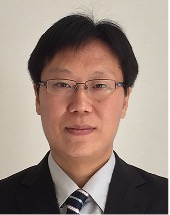
Prof. Celimgue Wu
The University of Electro-Communications, Japan
Biography:
Celimuge Wu received his PhD degree from The University of Electro-Communications, Japan. He is currently a professor and the director of Meta-Networking Research Center, The University of Electro-Communications. His research interests include Semantic Communications, Vehicular Networks, Edge Computing, IoT, and AI for Wireless Networking and Computing. He serves as an associate editor of IEEE Transactions on Cognitive Communications and Networking, IEEE Transactions on Network Science and Engineering, and IEEE Transactions on Green Communications and Networking. He is Vice Chair (Asia Pacific) of IEEE Technical Committee on Big Data (TCBD). He is a recipient of 2021 IEEE Communications Society Outstanding Paper Award, 2021 IEEE Internet of Things Journal Best Paper Award, IEEE Computer Society 2020 Best Paper Award and IEEE Computer Society 2019 Best Paper Award Runner-Up. He is an IEEE Vehicular Technology Society Distinguished Lecturer.
Topic:
Advancing Remote Driving with Low-Latency Video Semantic Communications
This talk introduces a novel low-latency video semantic communication framework tailored for remote driving scenarios. In contrast to conventional video transmission methods, the proposed system employs an asymmetric encoder–decoder architecture that transmits only a minimal number of bits by leveraging semantic feature extraction, while reconstructing high-quality video at the receiver through generative AI techniques. To validate its effectiveness, we design and implement a prototype system that seamlessly integrates semantic feature extraction, efficient transmission, and deep learning–based video reconstruction at the receiver side.
Organizers
Session Chair and Organizer: Celimuge Wu, UEC
Vice Session Chairs: Tutomu Murase, Nagoya University/Technical Committee on Information Networks IEICE and
Takahiro Hamada, NTT/Technical Committee on Information Networks IEICE
Secretary: Kosuke Sanada, Mie University/Technical Committee on Information Networks IEICE
CELIMUGE WU (Senior Member, IEEE) received the M.E. degree from the Beijing Institute of Technology, China, in 2006, and the Ph.D. degree from The University of Electro-Communications, Japan, in 2010. He is currently a Professor with the Graduate School of Informatics and Engineering, The University of Electro-Communications. His current research interests include vehicular ad hoc networks, sensor networks, intelligent transport systems, the IoT, and mobile cloud computing.
TUTOMU MURASE (Member, IEEE) was born in Kyoto, Japan, in 1961. He received the M.E. degree from the Graduate School of Engineering Science, Osaka University, Japan, in 1986, and the Ph.D. degree from the Graduate School of Information Science and Technology, Osaka University, in 2004. He was with NEC Corporation, from 1986 to 2014. He was a Visiting Professor with Tokyo Institute of Technology, from 2012 to 2014. He is currently a Professor with Nagoya University. He has many journal articles and conference papers in addition to more than 90 registered patents, including some international patents than domestic. He has been engaged in research on QoS control and traffic management for high-quality and high-speed Internet. His current interests include wireless network QoS control, MAC, transport and session layer traffic control, and network security. He is a fellow of the Institute of Electronics, Information and Communication Engineers (IEICE), Japan. He was the Secretary of the IEEE Communications Society Japan Chapter.
TAKAHIRO HAMADA (Member,IEEE) received an M.E. degree from the Graduate School of Engineering, Hokkaido University, Japan, in 2003, and joined NTT the same year. He transferred to NTT Communications in 2016 and returned to NTT in 2019. His current work focuses on research and development in cybersecurity, particularly on security-transparency assurance technologies for analyzing and visualizing software components.
Important Dates
Special Session Proposal Submission: |
|
May. 7th, 2025 (Extended) |
|
Manuscript Submission: |
|
|
|
Jul. 31st, 2025 (FIRM) |
|
Tutorial Proposal Submission: |
Jul. 31st, 2025 |
Notification of Acceptance: |
Sep. 10th, 2025 |
Camera-ready Submission: |
Oct. 15th, 2025 |
Conference Date: |
Nov. 26th-28th, 2025 |
Co-located with

Organized & Sponsored by