Real-Time Digital Twin Platform as a Real-World Foundation for Physical AI
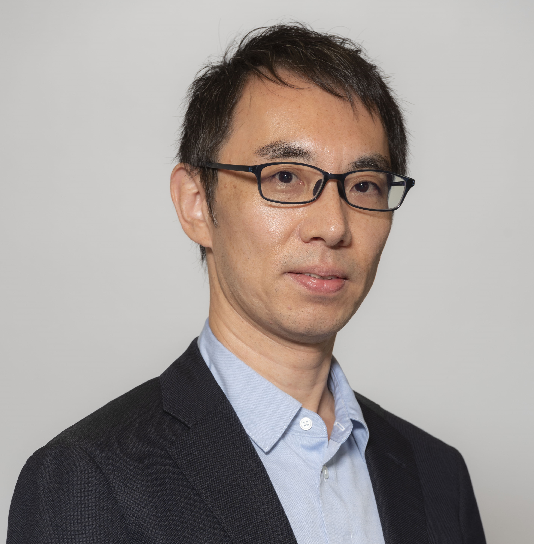
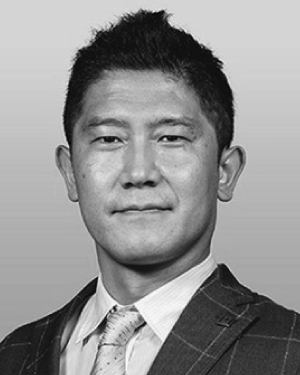
Prof. Kei Sakaguchi
Professor, Institute of Science Tokyo, Japan
Abstract
Physical AI systems must perceive, predict, and safely interact with dynamic real-world environments. This keynote presents our vision of a real-time digital twin platform as a real-world foundation integrating sensing, communications, computing, AI, and control. We first introduce lessons learned from the NSF-NICT-JUNO project, in which mobility digital twins were developed and experimentally validated for connected and automated driving. Building on these achievements, the JST ASPIRE project, involving ten institutions from seven countries, aims to establish an internationally standardized common platform for developing, training, validating, and operating Physical AI across mobility, industry, agriculture, and nursing care. Demonstrations in mobility and agriculture will illustrate the platform’s cross-domain applicability and its ability to share real-world data, digital twin models, AI capabilities, and computational resources across different fields. Finally, we discuss the future integration of humanoids as common physical actuators capable of acquiring and performing diverse tasks across all these application fields, paving the way toward an open, interoperable, and globally shared real-world foundation for Physical AI.
Biography
Kei Sakaguchi (Senior Member, IEEE) received the M.E. degree in information processing and the Ph.D. degree in electrical and electronics engineering from Tokyo Institute of Technology, Japan, in 1998 and 2006, respectively. Currently, he is the Program Director (VI-ILS), the Dean of the Academy of Super Smart Society, and a Professor with the School of Engineering, Institute of Science Tokyo (formerly Tokyo Institute of Technology). His current research interests include 5G/6G cellular networks, millimeter-wave communications, V2X for automated driving, digital twins, smart mobility, smart agriculture, smart ocean, and smart healthcare. He is a fellow of IEICE. He received the Outstanding Paper Awards from SDR Forum and IEICE, in 2004 and 2005, respectively, and the three Best Paper Awards from the IEICE Communication Society, in 2012, 2013, and 2015. He also received the Tutorial Paper Award from the IEICE Communication Society, in 2006.