

Program
Program
Program at a Glance
| Time Zone | December 1 (Wed.) | December 2 (Thu.) | December 3 (Fri.) | ||||||
|---|---|---|---|---|---|---|---|---|---|
| PST | EST | UTC | JST | Zoom | EventIn | Zoom | EventIn | Zoom | EventIn |
| 16:00 | 19:00 | 0:00 | 9:00 | Oral 4 3 Sessions B4, C3, D4  |
|||||
| 16:15 | 19:15 | 0:15 | 9:15 | ||||||
| 16:30 | 19:30 | 0:30 | 9:30 | Opening | Invited 2 2 Sessions IA2, IB2 |
Poster 4 1 Session P4 |
|||
| 16:45 | 19:45 | 0:45 | 9:45 | ||||||
| 17:00 | 20:00 | 1:00 | 10:00 | Keynote 1 | |||||
| 16:45 | 19:45 | 0:45 | 9:45 | ||||||
| 17:30 | 20:30 | 1:30 | 10:30 | ||||||
| 17:45 | 20:45 | 1:45 | 10:45 | Keynote 2 | |||||
| 18:00 | 21:00 | 2:00 | 11:00 | Keynote 4 | Keynote 5 | ||||
| 18:15 | 21:15 | 2:15 | 11:15 | ||||||
| 18:30 | 21:30 | 2:30 | 11:30 | ||||||
| 18:45 | 21:45 | 2:45 | 11:45 | ||||||
| 19:00 | 22:00 | 3:00 | 12:00 | ||||||
| 19:15 | 22:15 | 3:15 | 12:15 | ||||||
| 19:30 | 22:30 | 3:30 | 12:30 | ||||||
| 19:45 | 22:45 | 3:45 | 12:45 | ||||||
| 20:00 | 23:00 | 4:00 | 13:00 | Invited 1 2 Sessions IA1, IB1 |
Oral 2 3 Sessions B2,C1, D2 |
Special Session 1 1 Session SS1 |
|||
| 20:15 | 23:15 | 4:15 | 13:15 | ||||||
| 20:30 | 23:30 | 4:30 | 13:30 | Poster 2 1 Session P2 |
|||||
| 20:45 | 23:45 | 4:45 | 13:45 | ||||||
| 21:00 | 0:00 | 5:00 | 14:00 | Special Session 2 1 Session SS2, SS3 |
|||||
| 21:15 | 0:15 | 5:15 | 14:15 | ||||||
| 21:30 | 0:30 | 5:30 | 14:30 | ||||||
| 21:45 | 0:45 | 5:45 | 14:45 | ||||||
| 22:00 | 1:00 | 6:00 | 15:00 | Oral 1 3 Sessions A1, B1, D1 |
Oral 3 3 Sessions B3, C2, D3 |
Special Session 3 2 Session SS4, SS5 |
|||
| 22:15 | 1:15 | 6:15 | 15:15 | ||||||
| 22:30 | 1:30 | 6:30 | 15:30 | Poster 1 1 Session P1 |
Poster 3 1 Session P3 |
||||
| 22:45 | 1:45 | 6:45 | 15:45 | ||||||
| 23:00 | 2:00 | 7:00 | 16:00 | ||||||
| 23:15 | 2:15 | 7:15 | 16:15 | ||||||
| 23:30 | 2:30 | 7:30 | 16:30 | Closing | |||||
| 23:45 | 2:45 | 7:45 | 16:45 | ||||||
| 0:00 | 3:00 | 8:00 | 17:00 | Keynote 3 | Invited 3 2 Sessions IA3, IB3 |
||||
| 0:15 | 3:15 | 8:15 | 17:15 | ||||||
| 0:30 | 3:30 | 8:30 | 17:30 | ||||||
| 0:45 | 3:45 | 8:45 | 17:45 | ||||||
| 1:00 | 3:00 | 9:00 | 18:00 | ||||||
| 1:15 | 3:15 | 9:15 | 18:15 | ||||||
| 1:30 | 3:30 | 9:30 | 18:30 | Award Ceremony and Reception | |||||
| 1:45 | 3:45 | 9:45 | 18:45 | ||||||
| 2:00 | 4:00 | 10:00 | 19:00 | ||||||
| 2:15 | 4:15 | 10:15 | 19:15 | ||||||
| 2:30 | 4:30 | 10:30 | 19:30 | ||||||
| 2:45 | 4:45 | 10:45 | 19:45 | ||||||
Keynote Speakers
WEDNESDAY 1 DECEMBER 2021
Time 10:00 – 10:40 (JST)
 Theodore S. Rappaport
Professor / Founding Director, NYU WIRELESS
David Lee/Ernst Weber Professor of Electrical Engineering New York University
Title: The Impending Data Explosion in Wireless Communications
Abstract: This talk explores the amazing growth in data rates and download speeds over the past decade in wireless communications, and demonstrates how the three engineering pillars of 5G, massive-mimo, small cells, and millimeter wave communications, will bring forth far greater growth than anyone could imagine today, eventually enabling "wireless cognition" and "information showers," where real time over-the-air-data transmissions occur at the rate of human thinking.
Biography: Theodore S. Rappaport is the David Lee/Ernst Weber Professor at New York University (NYU) and holds faculty appointments in the Electrical and Computer Engineering Department, the Courant Computer Science Department, and the NYU Langone School of Medicine. He founded NYU WIRELESS, a multidisciplinary research center, and the wireless research centers at the University of Texas Austin (WNCG) and Virginia Tech (MPRG). His research has provided fundamental knowledge of wireless channels used to create the first Wi-Fi standard (IEEE 802.11), the first U.S. digital cellular TDMA and CDMA standards, the first public Wi-Fi hotspots, and more recently proved the viability of millimeter-wave and sub-THz frequencies for the cellular industry’s push to 5G, 6G, and beyond. He has authored popular engineering textbooks and co-founded two wireless communications companies that were sold to publicly traded firms. He is a member of the National Academy of Engineering, a Fellow of the National Academy of Inventors, and is a member of the Wireless History Foundation Hall of Fame.
Time 10:40 – 11:20 (JST)
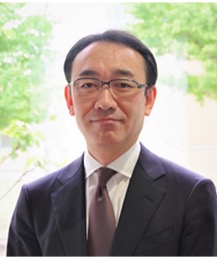 Masugi Inoue
Director General, Resilient ICT Research Center,
National Institute of Information and Communications Technology (NICT)
Title: Toward making the world more resilient: a work on resilient communication and information sharing platform and its deployment
Abstract: As natural disasters occur much more frequently and/or are more severe than expected year by year, “resilience” has been gaining greater attentions. The United Nations’ SDGs include building “resilient” infrastructure (Goal 9) and making cities and human settlements “resilient” (Goal 11). Future information and communications systems are expected to be more resilient, providing resilient information and communications services to make the society more resilient. Resiliency is a key feature of Beyond 5G and 6G. There are issues of not only the research and development of technologies regarding resilience but also making the technologies for practical use and deploying them as systems in society. Our work will be presented in this talk. NerveNet is an Internet-independent, resilient, secure, information sharing, and communication platform technology. You can easily deploy your own NerveNet using Linux PCs on the market as basestations and using various transmission systems on the market to interconnect them, configuring a network in any topology including mesh for obtaining resistance to failures (resilient networking). The basestations cooperatively perform distributed database, providing data applications to users without the Internet (resilient edge could). With these features, it is being used in some locations not only in Japan but also overseas such as Cambodia and Nepal as smart, resilient village networks in rural areas to offer digital contents to students and residents. Let’s come into resilient ICT area and have collaborations together!
Biography: Masugi Inoue graduated from Kyoto University in 1992 and received his Dr. Eng. degree from The University of Tokyo in 1997. After he joined the Communications Research Laboratory (CRL), which was reorganized as NICT in 2004, he contributed to develop the world fastest WLAN in MM-wave bands, common-signaling MIRAI architecture in heterogeneous networks for context-aware services in the 4G era, ID-locator split architecture (HIMALIS) for future Internet, etc. He has been working on a resilient platform system called NerveNet, which has been deployed and tested/operated in domestic and overseas locations. From 2016 to 2021, he worked on international cooperation and operated ASEAN IVO, Japan-US (JUNO) and Japan-EU (HORIZON) Joint Research Programs. He has been in his current position since April this year. He was a visiting researcher at Polytechnic University (now NYU WIRELESS), New York, in 2000. He served as Chairman of the Technical Committee on Mobile Network and Applications (MoNA, now merged into SeMI) in the IEICE Communications Society. He received the Best Paper Award from IPSJ in 2006 and 2007, and the Young Scientists’ Prize in 2007 and the Prize for Science and Technology in 2019 from the Minister of Education, Culture, Sports, Science and Technology. He is a fellow of IEICE and a member of IEEE.
Time 17:00 – 17:40 (JST)
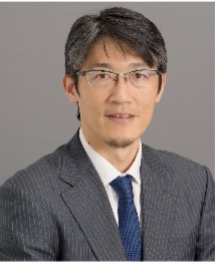 Tomoaki Ohtsuki
Professor, Keio University
Title: Machine Learning for Intelligent Wireless Communications
Abstract: With the rapid development in AI and machine learning (ML), future wireless communication systems will have much more intelligence. For problems that can be accurately modeled, traditional algorithms show good performance and efficient solutions on partially convex problems. However, for some non-convex problems, existing algorithms usually obtain more efficient solutions while allowing a certain performance loss. At this time, ML is used to mine the parameter information of the known structure algorithm from the obtained data samples, to improve the convergence speed of the algorithm and the performance of the algorithm. However, a large number of 5G and B5G scenarios cannot be modeled by exact mathematical models such as some efficiency and latency optimization problems, resulting in the inability to obtain an accurate algorithm structure. In this case, the artificial neural networks (ANNs) including deep neural network (DNN), convolutional neural network (CNN), and so on are used to parameterize the model or algorithm. These methods that obtain model or algorithm features from massive amounts of data rather than based on pre-established rules are generally called data-driven. This talk introduces ML based intelligent wireless communications, mainly focusing on the research and application of ML in the physical layer.
Biography: Tomoaki Ohtsuki is a Professor at Keio University. Prof. Ohtsuki is a recipient of the 1997 Inoue Research Award for Young Scientist, the 1997 Hiroshi Ando Memorial Young Engineering Award, Ericsson Young Scientist Award 2000, 2002 Funai Information and Science Award for Young Scientist, IEEE the 1st Asia-Pacific Young Researcher Award 2001, the 5th International Communication Foundation (ICF) Research Award, 2011 IEEE SPCE Outstanding Service Award, the 27th TELECOM System Technology Award, CHINACOM ’14 Best Paper Award, and so on. He has published more than 215 journal papers and 420 international conference papers.
He was Vice President and President of the Communications Society of the IEICE. He served as a Chair of IEEE ComSoc, SPCE TC. He is now serving as an Area Editor of the IEEE TVT and an editor of the IEEE COMST. He has served as general-co chair, symposium co-chair, and TPC co-chair of many conferences, including IEEE GLOBECOM, IEEE ICC, IEEE APWCS, IEEE SPAWC, and IEEE VTC. He is a fellow of the IEICE, a senior member and a distinguished lecturer of the IEEE, and a member of the Engineering Academy of Japan.
THURSDAY 2 DECEMBER 2021
Time 11:00 – 11:40 (JST)
 Etsushi Yamazaki
Network Innovation Laboratories, NTT
Title: Recent R&D efforts in digital coherent optical transmission technology
Abstract: Digital coherent optical transmission technology is indispensable for large-capacity optical transmission systems, and its typical signal processing and transceiver configuration will be introduced. The innovative modulation and coding schemes achieve better transmission performance, enabling transmission over a long- and ultra-long-haul distance for terrestrial and under-sea systems at a capacity beyond 100 Gbps. At the same time, for data center interconnection networks, there is a strong demand for an increase in transmission capacity. Therefore, a modulation size is increasing up to more than 64-point quadrature amplitude modulation even in the commercial system. At the same time, demand for Baudrate increase is remarkable, and Baudrates higher than 100Gbaud are demonstrated in the recent high capacity experiments. There, the sophistication of signal distortion compensation is also an important technology. In addition, to improve the system integration density, it is required to realize high throughput such as 400G with low power consumption, and recent trends in power efficiency will be covered.
Biography: ETSUSHI YAMAZAKI received the B.E. and M.E. degrees in electronic engineering from the University of Tokyo, Japan, in 2000 and 2002, respectively. He is currently with Nippon Telegraph and Telephone Corporation (NTT) Network Innovation Laboratories, Yokosuka, Japan, where he has been engaged in R&D for optical transmission system, and photonic network. He was a visiting researcher at Stanford University from 2018 to 2019. Mr. Yamazaki is a member of the IEEE, and the Institute of Electronics, Information and Communication Engineers (IEICE) of Japan. In 2012, he received Sakurai-Kenjiro memorial award from Optoelectronics Industry and Technology Development Association (OITDA) of Japan.
FRIDAY 3 DECEMBER 2021
Time 11:00 – 11:40 (JST)
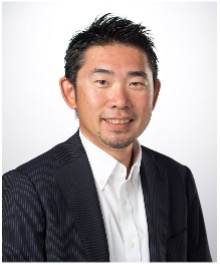 Ryuji Wakikawa
Vice President, Advanced Technology Division, SoftBank
Title: SoftBank network vision towards 6G
Abstract: In the 6G era, it is expected to bring new technological innovations, including high reliability and improved energy efficiency on top of enhancing 5G's features that include ultra-high-speeds, ultra-low latency, and massive device connectivity. To provide a network infrastructure needed for the 6G era society, SoftBank is taking up the challenge of resolving numerous issues in different areas. Working toward that goal, SoftBank's current initiatives include expanding into areas where wireless technologies can be utilized for purposes other than telecommunications such as evolving network architectures where AI can function, ensuring high levels of resiliency so that all businesses can utilize these advancements with peace of mind, and contributing to the realization of a carbon-free society.
In the presentation, Ryuji Wakikawa, SoftBank Corp. Vice President and Head of the Advanced Technology Division, will introduce you to SoftBank's 6G concept, as well as the challenges that need to be overcome to make the concept a reality and a glimpse of SoftBank's R&D.
Biography: Ryuji Wakikawa is a Vice President of advanced technology division at SoftBank Corp. He received his Ph.D in Media and Governance, Keio University, Japan in 2004. He has involved in IETF and 3GPP for the Internet and mobile protocols development.
Special Section Speakers
Special Session 1
FRIDAY 3 DECEMBER 2021
Time 13:00 - 13:50
Displacement and vibration monitoring by GB-SAR
Motoyuki Sato (Tohoku University)
Special Session 2
FRIDAY 3 DECEMBER 2021
Time 14:00 - 14:50
Two Methods of Conducted Disturbance Voltage Measurement with Floating Measurement Equipment
Naruto Arai (NTT East)
Enhanced Selected Mapping for Impulsive Noise Blanking in Multi-Carrier Power-line Communication Systems
Osamu Muta (Kyushu University)
Special Session 3
FRIDAY 3 DECEMBER 2021
Time 14:00 - 14:50
Radio Propagation Prediction by Artificial Neural Network for Wireless Service Area Planning
Kentaro Saito (Tokyo Denki University), Yongri Jin (Tokyo Institute of Technology), CheChia Kang (Tokyo Institute of Technology), Jun-ichi Takada (Tokyo Institute of Technology), Jenq-Shiou Leu (National Taiwan University of Science and Technology)
Efficient Channel Control for Coexistence of Human and Machine Type Communications
Kazuhiko Kinoshita (Tokushima University)
Special Session 4
FRIDAY 3 DECEMBER 2021
Time 15:00 - 16:15
Complexity-Reduced Adaptive PAPR Reduction Method Using Null Space in MIMO Channel for MIMO-OFDM Signals
Kenichi Higuchi (Tokyo University of Science)
PAPR Reduction of Coded Modulation Schemes Using Product Codes over Hexagonal Constellations
Hirohisa Kitahara (Ministry of Defense)
Block Diagonalization using General Inverse Matrix for MU-MIMO
Keiya Uchida (NTT DOCOMO, INC.), Mitoshi Fujimoto (University of Fukui), Koshiro Kitao (NTT DOCOMO, INC.), Tetsuro Imai (Tokyo Denki University)
Special Session 5
FRIDAY 3 DECEMBER 2021
Time 15:00 - 16:15
Reducing Dense Virtual Networks for Fast Embedding
Toru Mano (NTT)
How to use real IoT devices as malware sandbox
Satoshi Hara (FUJISOFT/Yokohama National University)
Efficient Reliability Evaluation of Multi-Domain Networks with Secure Intra-Domain Privacy
Atsushi Taniguchi (NTT), Takeru Inoue (NTT), Kohei Mizuno (NTT) and Takashi Kurimoto (NII), Atsuko Takefusa (NII), and Shigeo Urushidani (NII)
Invited Speakers
Invited Session IA1
WEDNESDAY 1 DECEMBER 2021
Time 13:00 - 14:40
Communication Technologies in Wireless Sensor Networks
Kampol Woradit (Chiang Mai University, Thailand)
Wireless Link Quality Prediction based on Deep Neural Network for Autonomous Mobility Robots
Riichi Kudo (NTT Corporation)
Mobility for QoS: User Cooperative Mobility in Ad Hoc Network
Tutomu Murase (Nagoya University)
Data Gathering of Wireless Sensor Networks for Recognition of Event Position
Osamu Takyu, Masashi Oda (Shinshu University)
Invited Session IB1
WEDNESDAY 1 DECEMBER 2021
Time 13:00 - 14:40
Recent Progress in Quality of Experience Studies
Tatsuya Yamazaki (Niigata University)
Towards Improving Online Conferences: Lessons from the Neuromatch Conferences
Titipat Achakulvisut (Department of Biomedical Engineering, Mahidol University)
On the Relation between Community Structure and Information Diffusion on Social Media
Sho Tsugawa (Tsukuba University)
Toward Efficient Federated Learning for Internet of Vehicles
Celimuge Wu (University of Electro-Communications)
Invited Session IA2
THURSDAY 2 DECEMBER 2021
Time 9:30 - 10:45
Long-term observation of the rain attenuation statistics in satellite communications links
Yasuyuki Maekawa (Osaka Electro-Communication University)
Integrated Visible Light Communication and Positioning Systems
Arokiaswami Alphones (Nanyang Technological University, Singapore)
Terminal Collaborative MIMO Reception: A New Technique for Exploiting Higher-Frequency Bands
Hidekazu Murata (Kyoto University)
Invited Session IB2
THURSDAY 2 DECEMBER 2021
Time 9:30 - 10:45
Low Loss MCF Technology
Masanori Takahashi (Furukawa Electric Co., Ltd.)
High-Capacity Transmission based on Mode Division Multiplexing Technologies
Daiki Soma (KDDI Research, Inc.)
Key Technologies and Activities toward Openness of Optical Transport System
Seiki Kuwabara (NTT Communications Corporation)
Invited Session IA3
THURSDAY 2 DECEMBER 2021
Time 17:00 - 18:15
Controlling Energy Flows in a Network of Electrical Oscillators by using Active Chaos
Arturo Buscarino (DIEEI, University of Catania, Italy)
BAN and D2D For Enabling Elderly Health Monitoring in Remote Areas
Huan-Bang Li (NICT)
Active/Passive Imaging Techniques For Security Applications
Hiroyasu Sato (Tohoku University)
Invited Session IB3
THURSDAY 2 DECEMBER 2021
Time 17:00 - 18:15
Intent-based Network Service Operations with Models and AI/ML
Takayuki Kuroda (NEC Corporation)
Problems, Their Solutions and Standardization in Named Base Communication for IoT services
Tetsuya Yokotani (Kanazawa Institute of Technology (KIT))
Role of Standardization for Technological Innovation ~Introduction of Technical Committee on Standardization and Innovation in ICT(SIIT)~
Toru Yamada (NEC Corporation)
ICETC2021 Awards
Best Paper Award
B1-3
“Performance comparison between injection-locked carrier frequency conversion and self-heterodyne detection methods in coherently-linked optical and wireless transmission for 6G”
Keisuke Kasai (Tohoku University), Taisei Sato (Tohoku University), Koichi Shirahata (Tohoku University), Toshihiko Hirooka (Tohoku University), Masato Yoshida (Tohoku University), Masataka Nakazawa (Tohoku University)
A1-5
“A Wideband Double-Balanced Multiplier Integrated Circular-Polarization Switchable Microstrip Antenna with Parasitic Elements”
Tatsuki Kayashima (Saga University), Eisuke Nishiyama (Saga University), Ichihiko Toyoda (Saga University)
C1-4
“Privacy-Protective Distributed Machine Learning Using Rich Clients”
Saki Takano (Ochanomizu University), Akihiro Nakao (the University of Tokyo), Saneyasu Yamaguchi (Kogakuin University), Masato Oguchi (Ochanomizu University)
Best Poster Award
P1-3
“A Study of Receiver Beamforming in 100 GHz-Band Massive MIMO Transmission”
Nobuhide Nonaka (NTT DOCOMO, Inc.), Satoshi Suyama (NTT DOCOMO, Inc.), Tatsuki Okuyama (NTT DOCOMO, Inc.), Takahiro Asai (NTT DOCOMO, Inc.)
P1-22
“Proposal of Window on Conversation Tree to Disaster Information Collecting”
Toshiyuki Fujita (Kogakuin University), Aki Kobayashi (Kogakuin University)
P1-13
“Incentive Mechanism for Maximizing Social Surplus in Federated Learning with Differential Privacy”
Shota Miyagoshi (University of Fukui), Takuji Tachibana (University of Fukui)
Outstanding Contribution Award
Prof. Saneyasu Yamaguchi (Kogakuin University)
Prof. Osamu Takyu (Shinshu University)
Prof. Hiroyuki Ohsaki (Kwansei Gakuin University)
Prof. Takuji Tachibana (University of Fukui)
Student Presentation Award
Naoki Fujita (The University of Tokyo)
Koki Yamashiro (Kanazawa Institute of Technology)
Tomoki Yamagami (The University of Tokyo)
Ryosuke Okamoto (Okayama University)
Hiroki Hase (Kyushu University)
Keita Sekiyama (Nagoya Institute of Technology)
Akihiro Yoshitake (Chiba university)
Aoi Watanabe (Tohoku University)
Issei Makino (Kagawa University)
Taichi Okumura (Keio University)
Kaito Nakata (Keio University)
Yuusuke Hashimoto (Osaka Prefecture University)
Kei Shimizu (Tokyo City University)
Tatsuya Oryu (International Christian University)
Akishige Ikoma (Osaka University)
Yuan Tian (Sophia University)
Yohei Konishi (University of Hyogo)
Rikuto Yoshizawa (Keio University)
Shunsuke Sato (Nihon University)
Koki Ozono (Fukuoka University)
Noriaki Kaneko (Sophia University)