
Program
Program
- You can show pre-recorded presntations in each session if you click on "video presentation (Vimeo)" from the day after the session.
| Time Zone | December 2 (Wed.) |
December 3 (Thu.) |
December 4 (Fri.) |
|||
|---|---|---|---|---|---|---|
| PST | EST | UTC | JST | |||
| 16:00 | 19:00 | 0:00 | 9:00 | Opening |
Oral Session 2 (Parallel Session) A2, B2, C2, D2, E2 
|
Oral Session 4 (Parallel Session) A4, B4, C4, D4, E4 |
| 16:15 | 19:15 | 0:15 | 9:15 | |||
| 16:30 | 19:30 | 0:30 | 9:30 | Short Presentation Session 1 (Parallel Session) F1, G1, H1, I1, J1, K1, L1, M1, N1, O1, P1 |
||
| 16:45 | 19:45 | 0:45 | 9:45 | |||
| 17:00 | 20:00 | 1:00 | 10:00 | |||
| 17:15 | 20:15 | 1:15 | 10:15 | |||
| 17:30 | 20:30 | 1:30 | 10:30 | |||
| 17:45 | 20:45 | 1:45 | 10:45 | |||
| 18:00 | 21:00 | 2:00 | 11:00 | Keynote 1 and 2 Hiroyuki Morikawa Zhisheng Niu |
Keynote 4 Abbas Jamalipour |
Keynote 6 Satoshi Konishi |
| 18:15 | 21:15 | 2:15 | 11:15 | |||
| 18:30 | 21:30 | 2:30 | 11:30 | |||
| 18:45 | 21:45 | 2:45 | 11:45 | Lunch Break | Lunch Break | |
| 19:00 | 22:00 | 3:00 | 12:00 | |||
| 19:15 | 22:15 | 3:15 | 12:15 | Lunch Break | ||
| 19:30 | 22:30 | 3:30 | 12:30 | |||
| 19:45 | 22:45 | 3:45 | 12:45 | |||
| 20:00 | 23:00 | 4:00 | 13:00 | Short Presentation Session 2 (Parallel Session) F2, G2, H2, I2, J2, K2, L2, M2, N2, O2, P2 |
Special Session 2 on IEICE Communications Society Editorial Board (Parallel Session) SC, SD |
|
| 20:15 | 23:15 | 4:15 | 13:15 | |||
| 20:30 | 23:30 | 4:30 | 13:30 | Invited Session 1 (Parallel Session) IA1, IB2 |
||
| 20:45 | 23:45 | 4:45 | 13:45 | |||
| 21:00 | 0:00 | 5:00 | 14:00 | |||
| 21:15 | 0:15 | 5:15 | 14:15 | |||
| 21:30 | 0:30 | 5:30 | 14:30 | |||
| 21:45 | 0:45 | 5:45 | 14:45 | |||
| 22:00 | 1:00 | 6:00 | 15:00 | Oral Session 1 (Parallel Session) A1, B1, C1, D1, E1 |
Oral Session 3 (Parallel Session) A3, B3, C3, D3, E3 |
|
| 22:15 | 1:15 | 6:15 | 15:15 | |||
| 22:30 | 1:30 | 6:30 | 15:30 | |||
| 22:45 | 1:45 | 6:45 | 15:45 | |||
| 23:00 | 2:00 | 7:00 | 16:00 | Invited Session 3 IA3, IB3 |
||
| 23:15 | 2:15 | 7:15 | 16:15 | |||
| 23:30 | 2:30 | 7:30 | 16:30 | |||
| 23:45 | 2:45 | 7:45 | 16:45 | |||
| 0:00 | 3:00 | 8:00 | 17:00 | Keynote 3 Takehiro Nakamura |
Keynote 5 Shinya Tachimoto |
Keynote 7 Lajos Hanzo  |
| 0:15 | 3:15 | 8:15 | 17:15 | |||
| 0:30 | 3:30 | 8:30 | 17:30 | |||
| 0:45 | 3:45 | 8:45 | 17:45 | Special Session 1 on IEICE International Sections (Parallel Session) SA, SB |
Invited Session 3 IA3, IB3 |
|
| 1:00 | 3:00 | 9:00 | 18:00 | Tutorial Geoffrey Ye Li Detailed |
||
| 1:15 | 3:15 | 9:15 | 18:15 | |||
| 1:30 | 3:30 | 9:30 | 18:30 | |||
| 1:45 | 3:45 | 9:45 | 18:45 | Closing |
||
| 2:00 | 4:00 | 10:00 | 19:00 | |||
| 2:15 | 4:15 | 10:15 | 19:15 | Invited Session 2 (Parallel Session) IA2, IB2
|
||
| 2:30 | 4:30 | 10:30 | 19:30 | |||
| 2:45 | 4:45 | 10:45 | 19:45 | |||
| 3:00 | 5:00 | 11:00 | 20:00 | |||
| 3:15 | 5:15 | 11:15 | 20:15 | |||
| 3:30 | 5:30 | 11:30 | 20:30 | Award Ceremony and Reception | ||
| 3:45 | 5:45 | 11:45 | 20:45 | |||
| 4:00 | 6:00 | 12:00 | 21:00 | |||
| 4:15 | 6:15 | 12:15 | 21:15 | |||
| 4:30 | 6:30 | 12:30 | 21:30 | |||
| 4:45 | 6:45 | 12:45 | 21:45 | |||
Detailed programs for Oral presentation (PDF), Short presentation (PDF), Special Session (PDF), and Invited Session (PDF).
| Presentation | Q&A | |
| Keynote | 30 min | 3-5 min |
| Tutorial | 60 min | 3-5 min |
| Invited | 20 min | 3-5 min |
| Oral | 15 min | 3-4 min |
| Short Presentation | 9 min | 2-3 min |
Keynote Speakers
WEDNESDAY 2 DECEMBER 2020
Time 11:00 – 11:35 (JST)
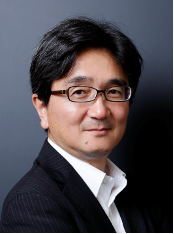 Hiroyuki Morikawa
Professor, University of Tokyo
Title: How to Face “Digital” in Post COVID-19 Era
Abstract: “Digital” can be a catalyst for transforming industrial, business, and even social structures. The impact of “digital” on our society is like that of washing machines. The washing machine not only reduced domestic work, but also changed the idea of hygiene. People started to change their clothes every day, and the clothing market increased. The important thing is that almost all people did not understand the market expansion when washing machine appeared. Similar to washing machines, no one knows at this point how “digital” will change our society. In addition, a major change in social / worldview with COVID-19 will also accelerate digital social change. As the black death disease was said to lead to the invention of the Gutenberg printing press and the rise of English, COVID-19 will change our business structures with time. Companies in any industrial domain must position and face digital in their management strategies that create new value. Towards facing post COVID-19, perspectives such as "evolving technology", "getting to the ground", "diversity that leads to awareness", "spreading pies instead of competing for pies" are described to be important.
Biography: Hiroyuki Morikawa received the B.E., M.E, and Dr. Eng. degrees in electrical engineering from the University of Tokyo, Japan, in 1987, 1989, and 1992, respectively. Since 1992, he has been in the University of Tokyo, where he is currently a professor. From 2002 to 2006, he was a group leader of the NICT Mobile Networking Group.
His research interests are in the areas of Internet of Things / M2M / big data, wireless communications, sensor networks, digital transformation, and digital society design.
He served as an OECD Committee on Digital Economy Policy (CDEP) vice chair, director of New Generation M2M Consortium, chairman of 5G-driven Social Design Consortium, chairman of Smart Resilience Network, chairman of Information and Communications Council, Ministry of Internal Affairs and Communications, vice president of IEICE, and a technical program committee chair of many IEEE/ACM conferences and workshops.
He also sits on numerous telecommunications advisory committees and frequently serves as a consultant to government and companies. He is the recipient of more than 100 honors and awards including the Info-Communications Promotion Month Council President Prize, the Rinzaburo Shida Award, and the Radio Day Ministerial Commendation. His recent books are Data-driven Economy (2019) and 5G (2020).
Time 11:35 – 12:10 (JST)
 Zhisheng Niu
Professor, Dept. of Electronic Engineering, Tsinghua University
Title: Urgency of Information for Context-Aware Timely Status Updates in Remote Control Systems
Abstract: As 5G and Internet-of-Things (IoT) are deeply integrated into vertical industries such as autonomous driving and industrial robotics, timely status update (TSU) is crucial for remote monitoring and control. In this regard, Age of Information (AoI) has been proposed to measure the freshness of status updates. However, it is irrelevant of context and just a metric changing linearly with time. We propose a context-aware metric, named as Urgency of Information (UoI), to measure the nonlinear time-varying importance and the non-uniform context-dependence of the status information. Then we establish a theoretical framework for UoI characterization and provide UoI-optimal status updating and user scheduling schemes in both single-terminal and multi-terminal cases. Specifically, an update-index-based scheme is proposed for a single-terminal system, where the terminal always updates and transmits when its update index is larger than a threshold. For the multi-terminal case, the UoI of the proposed scheduling scheme is proven to be upper-bounded and its decentralized implementation by Carrier Sensing Multiple Access with Collision Avoidance (CSMA/CA) is provided. Simulation results show that the proposed updating and scheduling schemes notably outperform the existing ones such as round robin and AoI-optimal schemes in terms of UoI, error-bound violation and control system stability.
Biography: Zhisheng Niu graduated from Beijing Jiaotong University, China, in 1985, and got his M.E. and D.E. degrees from Toyohashi University of Technology, Japan, in 1989 and 1992, respectively. During 1992-94, he worked for Fujitsu Laboratories Ltd., Japan, and in 1994 joined with Tsinghua University, Beijing, China. His major research interests include queueing theory and traffic engineering, wireless communications and mobile Internet, and green communication and networks.
Dr. Niu has served IEICE as a council member in 2009-2010, and IEEE Communications Society (ComSoc) as Chair of Beijing Chapter (2000-2008), Director of Asia-Pacific Board (2008-2009), Director for Conference Publications (2010-2011), Chair of Emerging Technologies Committee (2014-2015), Director for Online Contents (2018-2019), and currently as Editor-in-Chief of IEEE Trans. Green Commun. & Networks (2020-2022). He received the Outstanding Young Researcher Award from Natural Science Foundation of China in 2009, Best Paper Awards from ComSoc Asia-Pacific Board in 2013 and from Journal of Communications and Information Networks (JCIN) in 2019, Distinguished Technical Achievement Recognition Award from IEEE Green Communications & Computing Committee in 2018, and Harold Sobol Award from ComSoc in 2019. He is distinguished lecturer for ComSoc (2012-2015) as well as Vehicular Technologies Society (2014-2018). He is a fellow of both IEEE and IEICE.
Time 17:00 – 17:35 (JST)
 Takehiro Nakamura
NTT DOCOMO
Title: 5G evolution and 6G
Abstract: 5G commercial service was launched globally. Study and development for technologies toward evolution of 5G are ongoing taking into account issues in initial 5G and coming market needs. Research on beyond 5G/6G initiated in the world.
NTT DOCOMO published the white paper on 5G evolution and 6G in January, 2020 and updated in July, 2020. In this presentation, contents of the white paper and our latest study results on 5G evolution and 6G will be explained.
Biography: Mr. Takehiro Nakamura joined NTT Laboratories in 1990.He is now SVP and General Manager of the 6G Laboratories in NTT DOCOMO, Inc.
Mr. Nakamura has been engaged in the standardization activities for the W-CDMA, HSPA, LTE/LTE-Advanced and 5G at ARIB in Japan since 1997. He has been the Acting Chairman of Strategy & Planning Committee of 5G Mobile Communications Promotion Forum(5GMF) in Japan since October 2014.
Mr. Nakamura has also been contributing to standardization activities in 3GPP since1999, including as a contributor to 3GPP TSG-RAN as chairman from April 2009 to March 2013. He is also very active in standardization of C-V2X/Connected Car in ARIB and ITS Info-communications Forum in Japan. He is now a leader of Cellular SystemTask Group of ITS Info-communications Forum.
THURSDAY 3 DECEMBER 2020
Time 11:00 – 11:35 (JST)
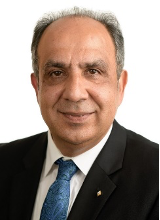 Abbas Jamalipour
PhD Fellow IEEE Fellow IEICE Fellow IEA
Professor of Ubiquitous Mobile Networking, The University of Sydney
President, IEEE Vehicular Technology Society
Title: Edge Computing and Aerial Connectivity for 6G Wireless Networks
Abstract: Research on the Sixth Generation Cellular Networks (6G) has already been started while the deployment of the new Fifth Generation Cellular Networks (5G) has only got started around the world. It would take some time before we get the full picture of credibility of 5G, but researchers already know that it would suffer from a range of shortcomings with the introduction of new applications and thus; the need for work on its successor 6G. What we know and expect at this time is that we still need to make users closer to the network edges, thus the inclusion of edge computing; and that we need more autonomous and intelligent techniques in the form of advanced machine learning and artificial intelligence. At the same time, we know that terrestrial network components will have fundamentally physical limitations in providing coverage and accessibility needed in future networks. That would bring the involvement of more of aerial support including drones and low earth orbit satellites. This talk will provide some visionary concepts of the future mobile networks that contemplate edge computing and aerial support using results from some existing intelligent techniques.
Biography: Abbas Jamalipour is the chair Professor of Ubiquitous Mobile Networking at the University of Sydney, Australia, and holds a PhD in Electrical Engineering from Nagoya University, Japan. He is a Fellow of the Institute of Electrical and Electronics Engineers (IEEE), the Institute of Electrical, Information, and Communication Engineers (IEICE), and the Institution of Engineers Australia (IEA), an ACM Professional Member, and an IEEE Distinguished Speaker. He has authored nine technical books, eleven book chapters, over 550 technical papers, and five patents, all in the field of wireless communications. Dr. Jamalipour is the President and an elected member of the Board of Governors of the IEEE Vehicular Technology Society. He was the Editor-in-Chief IEEE Wireless Communications, Vice President-Conferences and a member of Board of Governors of the IEEE Communications Society. He serves as an Editor of IEEE Access, IEEE Transactions on Vehicular Technology, and several other journals. He has been a General Chair or Technical Program Chair for a number of conferences, including IEEE ICC, GLOBECOM, VTC, WCNC and PIMRC. He is the recipient of a number of prestigious IEEE technical achievement awards, as well as over fifteen Best Paper Awards.
Time 17:00 – 17:35 (JST)
 Shinya Tachimoto
Head of NTT Information Network Laboratory Group, NTT
Title: IOWN as a new network infrastructure
Abstract: As a result of lifestyle changes to remote-style and the development of AI, data traffic is increasing exponentially. As more people and different kinds of things get connected, the network need to be more flexible, tougher, and smarter. NTT has proposed IOWN (Innovative Optical and Wireless Network) concept as a new communication infrastructure, and its future research and development vision. IOWN consists of the following three major technical fields, All Photonics Network, Digital Twin Computing, and Cognitive Foundation. Especially All Photonics Network, we aim to realize a network with low power consumption, high quality, large capacity and low latency by introducing photonics-based technologies. This talk will introduce IOWN concept and overview its network.
Biography: Shinya Tachimoto received his B.E. and M.E. degrees in mechanical engineering from Tokyo Institute of Technology in 1988 and 1990, respectively. He joined NTT in 1990 working initially on the development of switching systems. He had a key role in next-generation network (NGN) system development in the 2000s. In the 2010s, he was responsible for developing mobile network service applications at NTT docomo for five years. He then returned to NTT Network Service Systems Laboratories and he was a head of R&D for network service systems such as NFV/SDN systems, operation and transport systems, and the public switched telephone network (PSTN) systems. He is currently a head of NTT Information Network Laboratory Group for network architecture, network service, optical & wireless technologies and energy technologies.
FRIDAY 4 DECEMBER 2020
Time 11:00 – 11:35 (JST)
 Satoshi Konishi
Ph.D.
EVP and Head of Advanced Technology Laboratories, KDDI Research Inc.
VP of Technology Planning, KDDI Corp.
Title: KDDI's activities for 5G evolution and toward B5G/6G
Abstract: KDDI successfully launched 5G on 26th March, 2020 and has been trying to spread 5G to both consumers and enterprise customers. However, 5G has not been widely used in Japan due to COVID-19. This talk explains the latest situation on 5G and KDDI’s efforts to expand 5G. While much effort is made for the 5G evolution, we have to start studies on Beyond 5G or 6G toward year 2030.KDDI published a new company concept envisioning society in 2030 named “KDDI Accelerate 5.0” on 31st Aug. 2020. Outline of KDDI Accelerate 5.0 is also introduced in this talk. Finally, key technologies and activities in KDDI Research are presented toward 2030 aligned with KDDI Accelerate 5.0.
Biography: Dr. Satoshi Konishi joined KDD (currently KDDI) in 1993. He was involved in research and development in wireless communication systems such as low earth orbit (LEO) satellite systems, mesh-type fixed wireless access (FWA) systems, and mobile cellular systems. He led LTE commercialization from 2008 to 2012 inside of KDDI. Before that and at the same time, he led performance evaluation for IMT-Advanced systems including LTE in ITU-R and was chair of evaluation group in 3GPP2. Since 2014, he also successfully developed and commercialized new functions such as carrier aggregation, Voice over LTE (VoLTE), Femto cell, and so on for the LTE-Advanced system in KDDI as General Manager and Head of Mobile Access Technology Department in KDDI. He then conducted numerous demonstrations using 5G and 5G commercialization in KDDI since 2017, as General Manager and Head of Next Generation Network Development Department in KDDI. Since April 2020, he leads B5G/6G as Executive Vice President and Head of Advanced Technology Laboratories of KDDI Research Inc.
Time 17:00 – 17:35 (JST)
 Lajos Hanzo
FREng, FIEEE, FIET, RS Wolfson Fellow
Professor, the Chair in Telecommunications, University of Southampton
Title: Entangling Quantum-Signal Processing & Communications…
The presentation slides can be downloaded Here.
The article on the past, present, and future of wireless communications can be downloaded Here.
(You need the same ID and password as when you download the Final Program)
Abstract: The marriage of ever-more sophisticated signal processing and wireless communications has led to compelling ’tele-presence’ solutions - at the touch of a dialling key...
However, the ’quantum’ leaps both in digital signal processing theory and in its nano-scale based implementation is set to depart from classical physics obeying the well-understood laws revealed by science. We embark on a journey into the weird & wonderful world of quantum-physics, where the traveller has to obey the sometimes strange new rules of the quantum-world.
Hence we ask the judicious question: can the marriage of applied signal processing and communications extended beyond the classical world into the quantum world?
Biography: FREng, FIEEE, FIET, RS Wolfson Fellow, received his 5-year Master degree in electronics from the Technical University of Budapest in 1976, his doctorate in 1983 and his Doctor of Sciences (DSc) degree in 2004. During his career in telecommunications he has held various research and academic posts in Hungary, Germany and the UK. Since 1986 he has been with the School of ECS, University of Southampton, UK, where he holds the Chair in Telecommunications. His current research interests are featured at (http://www-mobile.ecs.soton.ac.uk).
Special Tutorial Session on Deep Learning in Wireless Communications
WEDNESDAY 2 DECEMBER 2020
Time 18:00 – 19:00 (JST)
Presenter: Dr. Geoffrey Ye Li, Dept of EEE, Imperial College London
The presentation slides can be downloaded Here.
(You need the same ID and password as when you download the Final Program)
Abstract: It has been demonstrated recently that deep learning (DL) has great potentials to break the bottleneck of the conventional communication systems. In this talk, we present our recent work in DL in wireless communications, including physical layer processing and resource allocation. DL can improve the performance of each individual (traditional) block in a conventional communication system or jointly optimize the whole transmitter or receiver. Therefore, we can categorize the applications of DL in physical layer communications into with and without block processing structures. For DL based communication systems with block structures, we present joint channel estimation and signal detection based on a fully connected deep neural network, model-drive DL for signal detection. For those without block structures, we provide our recent endeavors in developing end-to-end learning communication systems with the help of deep reinforcement learning (DRL) and generative adversarial net (GAN).
Judicious resource (spectrum, power, etc.) allocation can significantly improve efficiency of wireless networks. The traditional wisdom is to explicitly formulate resource allocation as an optimization problem and then exploit mathematical programming to solve it to a certain level of optimality. Deep learning represents a promising alternative due to its remarkable power to leverage data for problem solving and can help solve optimization problems for resource allocation or can be directly used for resource allocation. We will first present our research results in using deep learning to reduce the complexity of mixed integer non-linear programming (MINLP). We will then discuss how to use deep reinforcement learning directly for wireless resource allocation with application in vehicular networks.
 Biography: Geoffrey Ye Li is a Chair Professor at Imperial College London, UK. Before moving to Imperial in 2020, he was with Georgia Institute of Technology in Georgia, USA as a Professor for twenty years and with AT&T (Bell) Labs - Research in New Jersey, USA as a Principal Technical Staff Member for five years. His general research interests include statistical signal processing and machine learning for wireless communications. In these areas, he has published over 500 referred journal and conference papers in addition to over 40 granted patents. His publications have been cited over 43,000 times and he has been listed as the World’s Most Influential Scientific Mind, also known as a Highly-Cited Researcher, by Thomson Reuters almost every year since 2001. He has been an IEEE Fellow since 2006. He received 2010 IEEE ComSoc Stephen O. Rice Prize Paper Award, 2013 IEEE VTS James Evans Avant Garde Award, 2014 IEEE VTS Jack Neubauer Memorial Award, 2017 IEEE ComSoc Award for Advances in Communication, 2017 IEEE SPS Donald G. Fink Overview Paper Award, and 2019 IEEE ComSoc Edwin Howard Armstrong Achievement Award. He also won the 2015 Distinguished ECE Faculty Achievement Award from Georgia Tech.
Special Section Speakers
Special Session 1 on IEICE International Sections
THURSDAY 3 DECEMBER 2020
Time 17:50 – 20:00 (JST)
AWGR Modularization and Its Applications on Optical Switching and Interconnection
Tong Ye (Shanghai Jiao Tong University), Tony T. Lee (Chinese University of Hong Kong)
Reconfigurable Optical Networking for High-PerformanceComputing
Guojun Yuan(Institute of Computing Technology, Chinese Academy of Sciences (ICT)), Hongrui Zhu(Institute of Computing Technology, Chinese Academy of Sciences (ICT)), Wenzhe Li(Institute of Computing Technology, Chinese Academy of Sciences (ICT))
On Modelling Traffic Overflow in Multiservice Systems Using Hayward's Approach
Mariusz Glabowski (Poznan University of Technology)
Resonance
Maide Bucolo (Universita degli Studi di Catania), Arturo Buscarino (Universita degli Studi di Catania), Luigi Fortuna (Universita degli Studi di Catania), Mattia Frasca (Universita degli Studi di Catania)
Explainable Deep Convolutional Neural Network in EEG Seizure Onset Prediction
Punnawish THUWAJIT (Vidyasirimedhi Institute of Science & Technology (VISTEC)), Nannapas BANLUESOMBATKUL (Vidyasirimedhi Institute of Science & Technology (VISTEC)), Phattarapong SAWANGJAI (Vidyasirimedhi Institute of Science & Technology (VISTEC)), Payongkit LAKHAN (Vidyasirimedhi Institute of Science & Technology (VISTEC)), Theerawit WILAIPRASITPORN (Vidyasirimedhi Institute of Science & Technology (VISTEC))
Intelligent Sensing: Research on Non-contact Health MonitoringWith Artificial Intelligence Based on Bioradar
Lin Zhang (Beijing University of Posts and Telecommunications)
Cellular Internet of Things: Current State of the Art and the Road Ahead
Dejan Vukobratovic (University of Novi Sad)
Age of Information and Beyond in Wireless Networks
Zhiyuan Jiang (Shanghai University)
Prediction of Wireless MmWave Massive MIMO Channel Characteristics Based on Graph Attention Networks
Long Yu (Southeast University), Cheng-Xiang Wang (Southeast University)
Special Session 2 on IEICE Communications Society Editorial Board
THURSDAY 3 DECEMBER 2020
Time 13:00 – 15:50 (JST)
User-wise Joint Transmit-receive Diversity for Multi-user MIMO
Fumiyuki Adachi (Tohoku University), Ryo Takahashi (Tohoku University)
Content-based Wake-up for Aggregate Query in Wireless Sensor Networks
Hiroyuki Yomo (Kansai University), Junya Shiraishi (Kansai University), Hitoshi Kawakita (Kansai University)
Weathercast-linked Control of Lithium-Ion Battery in Green Base Stations
Masaki Nakamura (NTT DOCOMO, INC.), Kazuhiko Takeno (NTT DOCOMO, INC.), Masahito Shoyama (Kyushu University)
An Introduction of Social Network Analysis Techniques for Socially Aware Networking
Sho Tsugawa (University of Tsukuba)
For the applications of Stochastic resonance in the telecommunications and signal processing
Yukihiro Tadokoro (Toyota Central Research and Development Labs., Inc.), Takaya Yamazato (Nagoya University), Hiroya Tanaka (Toyota Central Research and Development Labs., Inc.), Shintaro Arai (Okayama University of Science), Yasuo Nakashima (Nagoya University), Shintaro Hiraoka (Nagoya University)
Multicore Erbium Doped Fiber Amplifiers for Multicore Fiber Transmission Systems
Hitoshi Takeshita (NEC Corporation), Keiichi Matsumoto (NEC Corporation), Kohei Hosokawa (NEC Corporation), Emmanuel Le Taillandier de Gabory (NEC Corporation)
Implementation of Dynamic Reconstruction Mechanism of Distributed SDN Control Plane
Takahiro Hirayama (National Institute of Information and Communications Technology(NICT)), Takaya Miyazawa (National Institute of Information and Communications Technology(NICT)), Ved P. Kafle (National Institute of Information and Communications Technology(NICT))
Search coil magnetometer with built-in ASIC preamplifier for space plasma wave observation under high-radiation environments
Yuya Tokunaga (Kanazawa University), Mitsunori Ozaki (Kanazawa University), Satoshi Yagitani (Kanazawa University), Hiroki Koji (Kanazawa University), Hirotsugu Kojima (Kyoto University)
Low-complexity Large MIMO detection via Gaussian Belief Propagation
Takumi Takahashi (Osaka University), Shinsuke Ibi (Doshisha University), Seiichi Sampei (Osaka University)
Invited Speakers
Recent Progress and Roadmap of Space Division Multiplexing Technologies
Itsuro Morita (KDDI Research, Inc.)
Interferometric technique for simultaneous measurement of the differential group delay between modes in few-mode fibers
Masaharu Ohashi (Osaka Prefecture University College of Technology), Nori Shibata (Nihon University), Hirokazu Kubota (Osaka Prefecture University), Yuji Miyoshi (Osaka Prefecture University)
An Initial Study on Designing Prediction-Based Resource Allocation in Satellite Communication Systems
Masaki Takahashi (Tohoku University), Yuichi Kawamoto (Tohoku University), Nei Kato (Tohoku Univesity)
Field Trial Activities of 5G Vehicle-to-Vehicle Direct Communication for Application to Truck Platooning
Manabu Mikami (Softbank Corp.), Hitoshi Yoshino (Softbank Corp.)
Interaction between Protocol Layers in Adaptive Video Steaming
Miki Yamamoto (Kansai University)
Dependable Virtual Clinic with Standard Platform of UWB-BAN, 5G/6G Cloud, and AI Data Mining against Pandemic and Daily Life
Ryuji Kohno (Yokohama National University), Chika Sugimoto (Yokohama National University), Takumi Kobayashi (Yokohama National University)
Flexible LPWA Based on Environmental Dynamics
Koichi Adachi (The University of Electro-Communications), Osamu Takyu (Shinshu University), Mai Ohta (Fukuoka University) ,Takeo FUJII (The University of Electro-Communications)
Intelligent Radio-Wave Design: Distributed Intelligent Reflecting Surface with Direction-based Control for Millimeter-wave Communications
Masashi Iwabuchi (Nippon Telegraph and Telephone Corporation (NTT)), Tomoki Murakami (Nippon Telegraph and Telephone Corporation (NTT)), Riku Ohmiya (Nippon Telegraph and Telephone Corporation (NTT)), Tomoaki Ogawa (Nippon Telegraph and Telephone Corporation (NTT)), Yasushi Takatori (Nippon Telegraph and Telephone Corporation (NTT)), Daisuke Kitayama (NTT DOCOMO, INC.), Yoshihisa Kishiyama (NTT DOCOMO, INC.), Takahiro Asai (NTT DOCOMO, INC.)
Two-dimensional Beam-switching Butler Matrix for Multi-beam Massive MIMO
Jiro Hirokawa (Tokyo Institute of Technology)
Design and fabrication of new broadband folded-type antenna and measurement of characteristics
Shinobu Ishigami (Tohoku Gakuin University), Toshiya Ishizaki (Tohoku Gakuin University), Kyo Kobayashi (Tohoku Gakuin University), Ken Kawamata (Tohoku Gakuin University), Katsushige Harima (National Institute of Information and Communications Technology(NICT)), Shingo Inori (Elena Electronics)
Development and Field Tests of a Drone Video Streaming System using Scalable Video Coding and Multiple Paths
Koichi Nihei (NEC Corporation)
NDN-based Publish/Subscribe Communication in Disasters
Yuki Koizumi (Osaka University), Yoji Yamamoto (Osaka University), Toru Hasegawa (Osaka University)
Research and Development Using Campus Network
Kenichi Yoshida (University of Tsukuba), Akira Sato (University of Tsukuba), Shuji Sannomiya (University of Tsukuba)
A Survey of Large-Scale Network Testbed Projects in the US and the EU
Eiji Kawai (NICT), Hiroaki Harai (NICT)
AWGR Modularization and Its Applications on Optical Switching and Interconnection
Tong Ye (Shanghai Jiao Tong University), Tony T. Lee (Chinese University of Hong Kong)
Reconfigurable Optical Networking for High-Performance Computing
Guojun Yuan(Institute of Computing Technology, Chinese Academy of Sciences (ICT)), Hongrui Zhu(Institute of Computing Technology, Chinese Academy of Sciences (ICT)), Wenzhe Li(Institute of Computing Technology, Chinese Academy of Sciences (ICT))
On Modelling Traffic Overflow in Multiservice Systems Using Hayward's Approach
Mariusz Glabowski (Poznan University of Technology)
Resonance
Maide Bucolo (Universita degli Studi di Catania), Arturo Buscarino (Universita degli Studi di Catania), Luigi Fortuna (Universita degli Studi di Catania), Mattia Frasca (Universita degli Studi di Catania)
Explainable Deep Convolutional Neural Network in EEG Seizure Onset Prediction
Theerawit Wilaiprasitporn (Vidyasirimedhi Institute of Science and Technology)
Intelligent Sensing: Research on Non-contact Health MonitoringWith Artificial Intelligence Based on Bioradar
Lin Zhang (Beijing University of Posts and Telecommunications)
Cellular Internet of Things: Current State of the Art and the Road Ahead
Dejan Vukobratovic (University of Novi Sad)
Age of Information and Beyond in Wireless Networks
Zhiyuan Jiang (Shanghai University)
Prediction of Wireless MmWave Massive MIMO Channel Characteristics Based on Graph Attention Networks
Long Yu(Southeast University), Cheng-Xiang Wang (Southeast University)
Research topics on Photonic Transport and Photonic Networks toward B5G/6G era
Takehiro Tsuritani (KDDI Research, Inc.)
Recent Progress of Real-time Space Division Multiplexed Techniques in Optical Fiber
Koji Igarashi (Osaka University)
Photonics-Applied High-Frequency Electromagnetic Field Measurement Techniques for 5G/Beyond-5G Mobile Systems and Millimeter-Wave Radars
Hiroshi Murata (Mie University)
Federation of IoT Systems and Service Function Chaining
Hidenori Nakazato (Waseda University)
Environment independent IT-management for low-cost and robustness operation
Tsunemasa Hayashi (BOSCO Technologies Inc.)
Survey on standardization activities of IoT and proposal of the IoT data exchange platform
Tetsuya Yokotani (Kanazawa Institute of Technology), Kazuya Kawai (National Institute of Advanced Industrial Science and Technology (AIST))
Modeling of Online Echo-Chamber Effect Based on the Concept of Spontaneous Symmetry
Masaki Aida (Tokyo Metropolitan University), Ayako Hashizume (Hosei University)
ICETC2020 Awards
Best Paper Award
A2-4
“An Enhanced Line and Load Regulation Technique of Voltage-Mode Control for VRM”
Daisuke Nakashima (Nagasaki University), Yoichi Ishizuka (Nagasaki University)
B3-4
“Area-based Primary Protection with Antenna Rotation Prediction for Dynamic Spectrum Access”
Hiroto Kuriki (Sony Corporation), Keita Onose (Sony Corporation), Ryota Kimura (Sony Corporation)
Ryo Sawai (Sony Corporation)
C2-4
“BER performance improvement of ultrahigh-speed coherent Nyquist pulse transmission using low- nonlinearity, dispersion-compensated transmission line with chirped FBG and LCoS”
Kosuke Kimura (Tohoku University), Taro Iwaya (Tohoku University), Masato Yoshida (Tohoku University)
Keisuke Kasai (Tohoku University), Toshihiko Hirooka (Tohoku University), Masataka Nakazawa (Tohoku University)
E2-1
“Distributed Route Selection under Consideration of Time Dependency among Agents’ Road Usage for Vehicular Networks”
Takanori Hara (Nara Institute of Science and Technology (NAIST))
Masahiro Sasabe (Nara Institute of Science and Technology (NAIST))
Shoji Kasahara (Nara Institute of Science and Technology (NAIST))
Best Short Paper Award
G2-5
“Design of Broadband Transition from Hollow Waveguide to Differential Line on Multi-layer Dielectric Substrates”
Shota Mariyama (Nagoya Institute of Technology), Kunio Sakakibara (Nagoya Institute of Technology)
Nobuyoshi Kikuma (Nagoya Institute of Technology), Yoshiki Sugimoto (Nagoya Institute of Technology)
I1-2
“Time-Domain Equalizer Using Neural Network Without Known Training Signals for OFDM Systems Without CP”
Kai Isaka (Ibaraki University), Teruyuki Miyajima (Ibaraki University), Yoshiki Sugitani (Ibaraki University)
L2-1
“Deeply programmable resource pool architecture by optically interconnected highly secure and manageable packet switching network”
Yutaka Nasu (Keio University), Satoru Okamoto (Keio University), Naoaki Yamanaka (Keio University)
Eiji Oki (Kyoto University), Takayuki Muranaka (ALAXALA Networks Corporation)
Andrea Fumagalli (The University of Texas at Dallas (UT Dallas))
N2-2
“Validating Unit Traffic Extraction Method with Another P2PTV Application”
Rina Ooka (Shibaura Institute of Technology), Takumi Miyoshi (Shibaura Institute of Technology)
Taku Yamazaki (Shibaura Institute of Technology), Thomas Silverston (Shibaura Institute of Technology)
P1-4
“Training Data Generation for RSSI-based Localization with Camera Object Detection”
Tomoya Sunami (Kyoto University), Takayuki Nishio (Kyoto University), Masahiro Morikura (Kyoto University)
Koji Yamamoto (Kyoto University)
Student Presentation Award
Semin An (Osaka University)
Kana Aono (Tokyo City University)
Khemarakboth Chhou (The University of Electro-Communications)
Yuuki Fujita (Wakayama University)
Maodudul Hasan (Saga University)
Yuusuke Hashimoto (Osaka Prefecture University)
Yusuke Hayashi (Wakayama University)
Naoki Hirakura (Tokyo Metropolitan University)
Eri Hosonuma (Shibaura Institute of Technology)
Takara Ijiro (Tokyo City University)
Koki Ito (Chiba University)
Yuki Ito (Waseda University)
Kevin Kipruto Mutai (Tohoku University)
Koloko Labson (Akita University)
Takeaki Matsunaga (Nara Institute of Science and Technology (NAIST))
Kouto Miyazawa (Kogakuin University)
Yusaku Shiomitsu (Nagoya Institute of Technology)
Shino Shiraki (Chiba University)
Xu Shuangyue (Tohoku University)
Seiya Tachibana (Shizuoka University)
Daichi Takeshima (Nagoya Institute of Technology)
Tsuyoshi Tanaka (Tokyo Metropolitan University)
Akio Tsuji (Kwansei Gakuin University)
Enzo Tsukui (Tokyo University of Science)
Takuya Yamamoto (Nagoya University)
Masaki Yoshii (Kogakuin University)
Outstanding Contribution Award
Prof. Kazuki Maruta (Tokyo Institute of Technology)
Prof. Takeshi Toda (Nihon Univ.)
Prof. Saneyasu Yamaguchi (Kogakuin University)