Tutorials
| Dr. Ui-Jun Baek | |

|
Dr. Ui-Jun Baek received his B.S., M.S., and Ph.D. degrees from Korea University in 2018, 2020, and 2025, respectively. He is currently a Senior Researcher with the Science and Technology Security Research Center, Division of Network Future Technology Research, Korea Institute of Science and Technology Information (KISTI), Republic of Korea. He conducts research on AI-based cyber threat detection and the reliability and explainability of AI outputs for security operations. His research interests include network security, network intrusion detection, trustworthy and explainable AI, and AI-assisted security operations. |
Summary of Presentation Artificial intelligence has demonstrated strong performance in cybersecurity tasks such as network intrusion detection, security event classification, and automated threat analysis. However, high predictive accuracy alone does not guarantee that AI-generated outputs are sufficiently reliable for use in real-world security operations. AI models may produce incorrect yet highly confident predictions, rely on dataset-specific shortcuts, or fail when operating conditions differ from those encountered during training. This tutorial presents practical perspectives on assessing the reliability of AI outputs in security operations. It introduces key concepts and techniques related to confidence calibration, uncertainty estimation, selective prediction, abstention, explainability, and evidence-based verification. Particular attention is given to how security analysts can determine whether an AI output should be accepted, reviewed, or withheld rather than treating every prediction equally. Examples from network intrusion detection and AI-assisted security operations will be used to discuss the limitations of accuracy-centered evaluation and the operational considerations required for trustworthy AI deployment. |
| Prof. Chin-Ya Huang (NTUST) | |

|
Dr. Huang received the B.S. degree in electrical engineering from National Central University, Taiwan, in 2004, the M.S. degree in communication engineering from National Chiao-Tung University, Taiwan, in 2006. She also received M.S. degrees in both electrical and computer engineering (2008) and computer science (2010), and Ph.D degree in electrical and computer engineering (2012) all from University of Wisconsin-Madison, USA. Since 2022, she worked as an associate professor in National Taiwan University of Science and Technology (NTUST), Taiwan. She also worked as assistant professor in National Taiwan University of Science and Technology and National Central University, Taiwan in 2018-2022 and 2015-2018, respectively. She worked as a member of technical staff in Optimum Semiconductor Tech. Inc, NY, USA from 2013-2015. In 2012, she was a senior software engineer at Qualcomm Tech. San Diego, CA, USA. Her research interests include wireless networking and network security. |
Summary of Presentation As emerging applications such as AI-native services, extended reality (XR), autonomous vehicles, edge intelligence, and non-terrestrial networks (NTNs) demand seamless connectivity with stringent latency and reliability requirements, conventional mobility mechanisms are increasingly insufficient to address the scale, dynamics, and operational complexity of next-generation networks. This tutorial provides a comprehensive introduction to AI-driven mobility for future wireless and edge networking. It begins by reviewing the fundamentals of mobility management, including handover procedures, routing adaptation, multipath transport, and edge-assisted mobility. This tutorial then presents recent advances in AI-enabled mobility prediction, resource optimization, network digital twins, and emerging Agentic AI techniques for autonomous network operation and intelligent mobility orchestration. Beyond AI algorithms, the tutorial presents an end-to-end development workflow for AI-driven mobility, covering simulation, implementation, experimentation, and deployment using representative platforms and programmable wireless systems, including ns-3, OpenAirInterface (OAI), free5GC, O-RAN Software Community (O-RAN SC), and representative AI-RAN platforms. To bridge research and practice, the tutorial further discuss how AI-driven mobility solutions can be validated and deployed using representative large-scale research infrastructures, including Colosseum, AERPAW, Arena, and SLICES-RI, together with representative industrial use cases in enterprise Wi-Fi, Open RAN, and AI-assisted network operations, illustrating the transition from laboratory research to real-world deployment. Particular emphasis is placed on the system integration and operational challenges associated with developing and deploying AI-driven mobility systems, including cross-layer orchestration, real-time constraints, distributed data collection, synchronization across heterogeneous network components, reproducible experimentation, and the design, deployment, operation, and long-term maintenance of wireless research testbeds. By following the complete lifecycle of AI-driven mobility, from mobility fundamentals and AI algorithms to system implementation, experimental validation, and operational deployment, this tutorial equips researchers, engineers, and graduate students with both the technical knowledge and practical engineering insights required to design, implement, validate, and operate next-generation AI-driven mobility systems for future wireless and edge networks. |
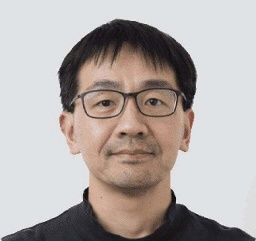
| Ayachika Kitazaki (SoftBank Corp.) | |
|
Ayachika Kitazaki is an engineering manager at SoftBank Corp. with more than 25 years of experience in telecommunications systems development and network operations. He has led initiatives in operations automation, site reliability engineering, proactive operations, machine learning, and future operations design. He has also contributed to technical education and industry collaboration through conferences, publications, and activities related to messaging security. In recent years, he has been promoting generative AI and managing AI-related projects and training programs within SoftBank. His current focus is on autonomous networks and AI-driven transformation of telecommunications operations. |
| Takuya Miyasaka (KDDI Research, Inc.) | |

|
Takuya Miyasaka received his M.S. in Information Science and Technology from the University of Tokyo in 2011 and joined KDDI Corporation, spending seven years advancing the development of KDDI's nation-wide backbone network. In 2018 he was seconded to KDDI Research, Inc., where he led research on communication infrastructure for connected vehicles and contributed to related standards work until 2021. He now heads R&D and standardization initiatives in network operations at KDDI Research, focusing on autonomous operation, intent-based networking, and AI-driven management frameworks. His professional interests span network architecture, large-scale automation, and the application of AI/ML to carrier-grade infrastructures. He is an active member of IEICE, TM Forum, and several IETF working groups, and currently serves as Chair of JANOG (Japan Network Operators' Group). |
Summary of Presentation In recent years, the increasing scale of communication networks and the growing complexity of communication services have led to greater complexity in network operations. Improving operational efficiency and responsiveness while reducing dependence on individual expertise has become a critical challenge. To address this, telecommunications operators are actively pursuing the automation and autonomy of network operations, as envisioned by the TM Forum's Autonomous Networks framework. This session will present the latest developments and challenges in enhancing network operations through AI adoption by leading telecommunications operators in Japan. |
| Shogo Fukushima (NTT DOCOMO, INC.) | |

|
Shogo Fukushima received the M.E. degree in Engineering from the Nara Institute of Science and Technology (NAIST), Japan, in 2021. He joined NTT DOCOMO, INC. in 2021, where he worked on the development of subscriber data management systems for mobile communication networks. He is currently engaged in the operation and maintenance of a mobile network provisioning system and leads an in-house development project for applying AI to improve maintenance operation efficiency. |
| Junta Tachibana (NTT DOCOMO, INC.) | |

|
Junta Tachibana received his M.E. degree in Information Engineering from Keio University, Japan, in 2021. He joined NTT DOCOMO, INC. in the same year. Since then, he has been engaged in the maintenance and operation of mobile network provisioning systems. He has also led various initiatives to improve network operations through automation, operational process optimization, and the use of cloud-native technologies. |
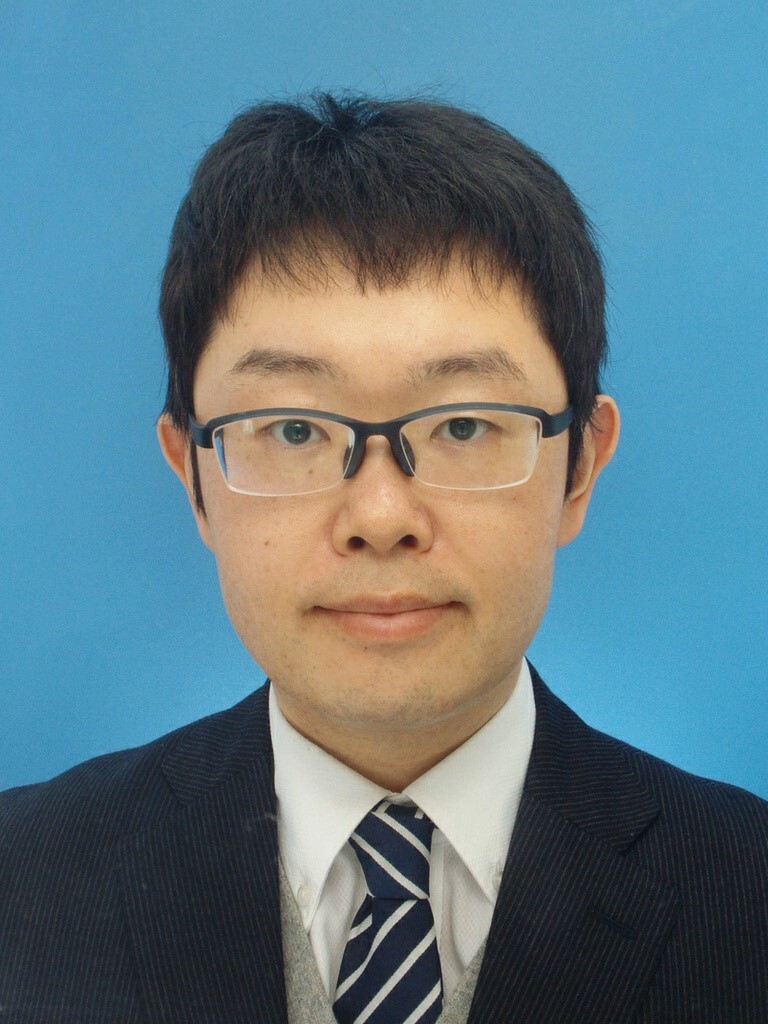
| Shintaro Arai (NTT ME, INC.) | |
|
Shintaro Arai received his M.E. degree in Information Engineering from Tohoku University in 2015, and his M.S. degree in Artificial Intelligence Science from Rikkyo University in 2024. He joined Nippon Telegraph and Telephone East Corporation (NTT EAST) in 2015 and is currently with NTT ME, INC. After gaining practical experience in on-site network construction and field deployment, he engaged in remote configuration, large-scale network construction projects, and operational streamlining at the Network Operation Center (NOC). His current work and technical interests focus on workflow automation and the application of AI to network deployment and provisioning. |
| Ryosuke Sato (NTT FIELDTECHNO CORPORATION) | |

|
Ryosuke Sato received his M.S. degree in Information Science from Nagoya University in 2013 and joined NTT WEST, Inc. in 2014. He began his career developing edge network equipment at the Research and Development Center of NTT WEST. He subsequently worked at the Network Service Operations Center of NTT FIELDTECHNO CORPORATION, where he was engaged in network operations, maintenance, and automation. He also conducted research on AIOps at NTT's Network Innovation Center before returning to NTT FIELDTECHNO to promote the practical adoption of AIOps. He currently serves as a Specialist Infrastructure Engineer, focusing on the implementation of AIOps technologies. His technical interests include the use of generative AI to support and automate network operations. |
Summary of Presentation In recent years, the increasing scale of communication networks and the growing complexity of communication services have led to greater complexity in network operations. Improving operational efficiency and responsiveness while reducing dependence on individual expertise has become a critical challenge. To address this, telecommunications operators are actively pursuing the automation and autonomy of network operations, as envisioned by the TM Forum's Autonomous Networks framework. This session will present the latest developments and challenges in enhancing network operations through AI adoption by leading telecommunications operators in Japan. |